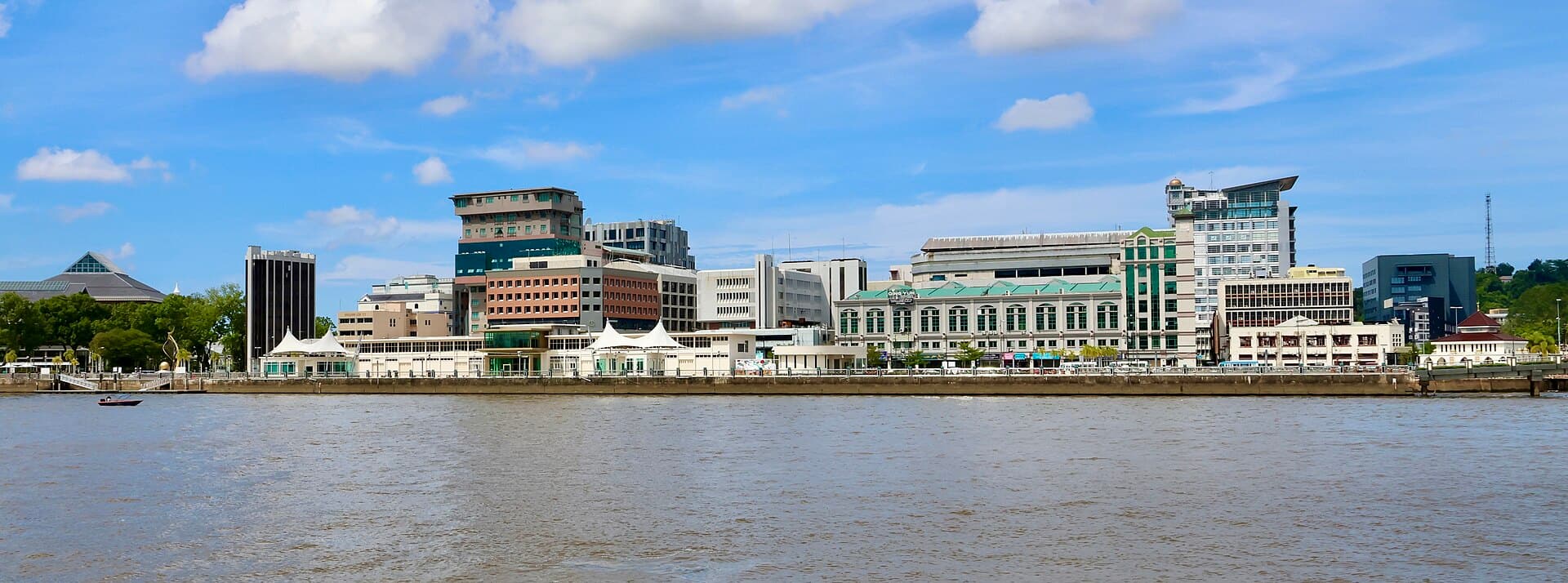
Brunei Darussalam — “the Abode of Peace” — is a Malay Islamic monarchy of fewer than half a million people on the north coast of Borneo, surrounded on the landward side by the Malaysian state of Sarawak. Its capital, Bandar Seri Begawan, is green, orderly, safe and very quiet. This guide explains the background, the practicalities and the local rules.
A short history
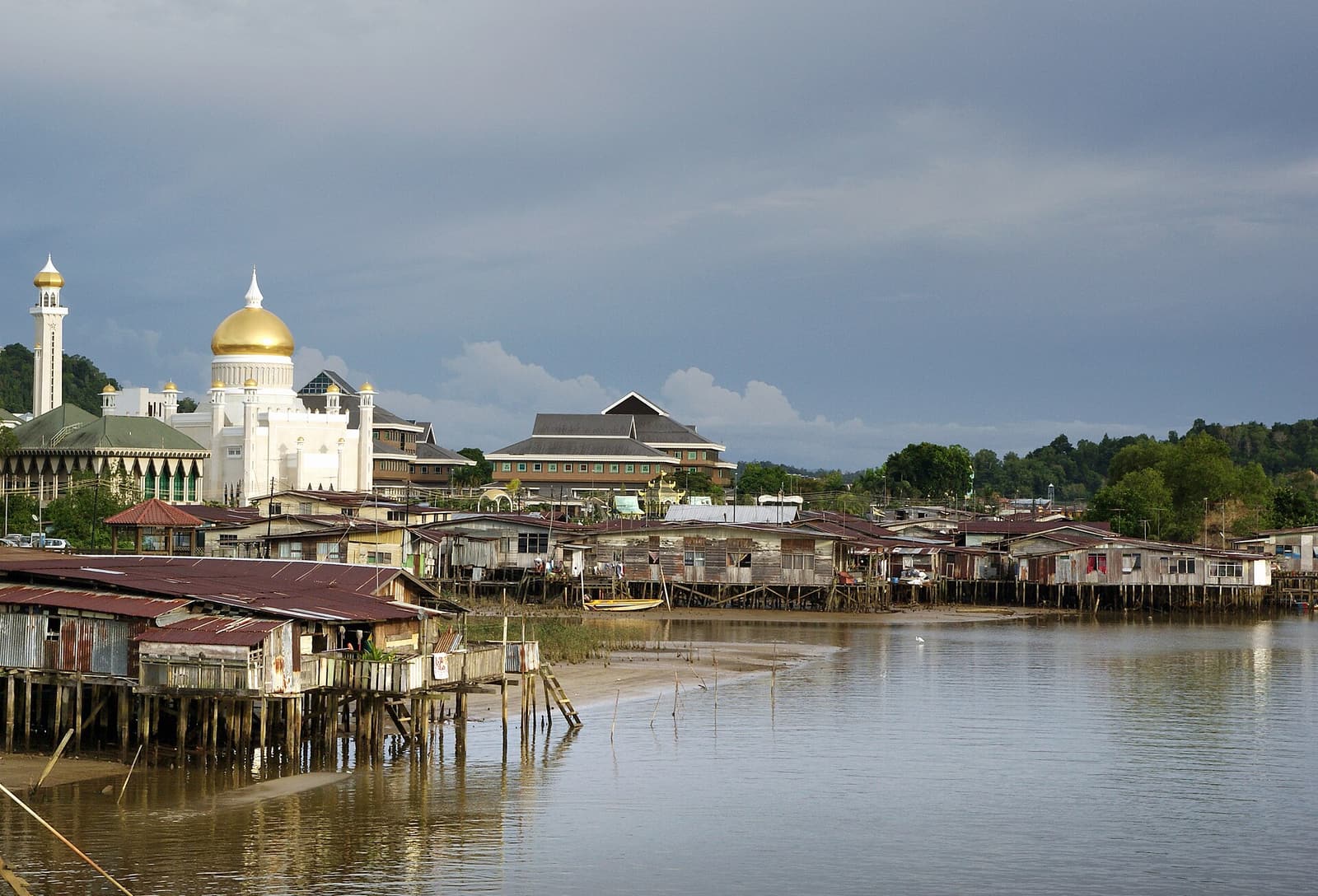
Brunei is one of the oldest continuous monarchies in the world. At its height in the fifteenth and sixteenth centuries, under Sultan Bolkiah, the Bruneian empire is said to have controlled much of coastal Borneo and parts of the southern Philippines. European visitors in 1521 found a wealthy court ruling from a city built over the water — today’s Kampong Ayer.
Centuries of decline followed. By the late nineteenth century the sultanate had lost most of its territory, and in 1888 it became a British protectorate. From 1906 a British Resident advised the Sultan, and the town began to move from the river onto dry land. Everything changed in 1929, when oil was found at Seria.
After Japanese occupation in the Second World War, Sultan Omar Ali Saifuddien III used oil revenue to build the modern state, including the mosque that bears his name. In 1970 the capital, until then called Brunei Town, was renamed Bandar Seri Begawan in his honour. Full independence from Britain came on 1 January 1984 under his son, Sultan Hassanal Bolkiah, who still reigns.
Understanding the city
| Area | Character | Come here for |
|---|---|---|
| City centre (Pusat Bandar) | Small, walkable, quiet after dark | Omar Ali Saifuddien Mosque, waterfront, Royal Regalia Museum, Tamu Kianggeh |
| Kampong Ayer | Stilt villages across the river | Boardwalks, the Cultural & Tourism Gallery, boat tours |
| Gadong & Kiulap | Commercial, busiest in the evening | Night market, The Mall, restaurants, Jame’ Asr mosque nearby |
| Kota Batu | Riverside, historic | Malay Technology and Maritime museums, royal tomb |
| Jerudong | Coastal, spacious | The Empire Brunei, Jerudong Park, beach |
| Berakas | Airport and government offices | Early flights, business stays |
 City centre & the river
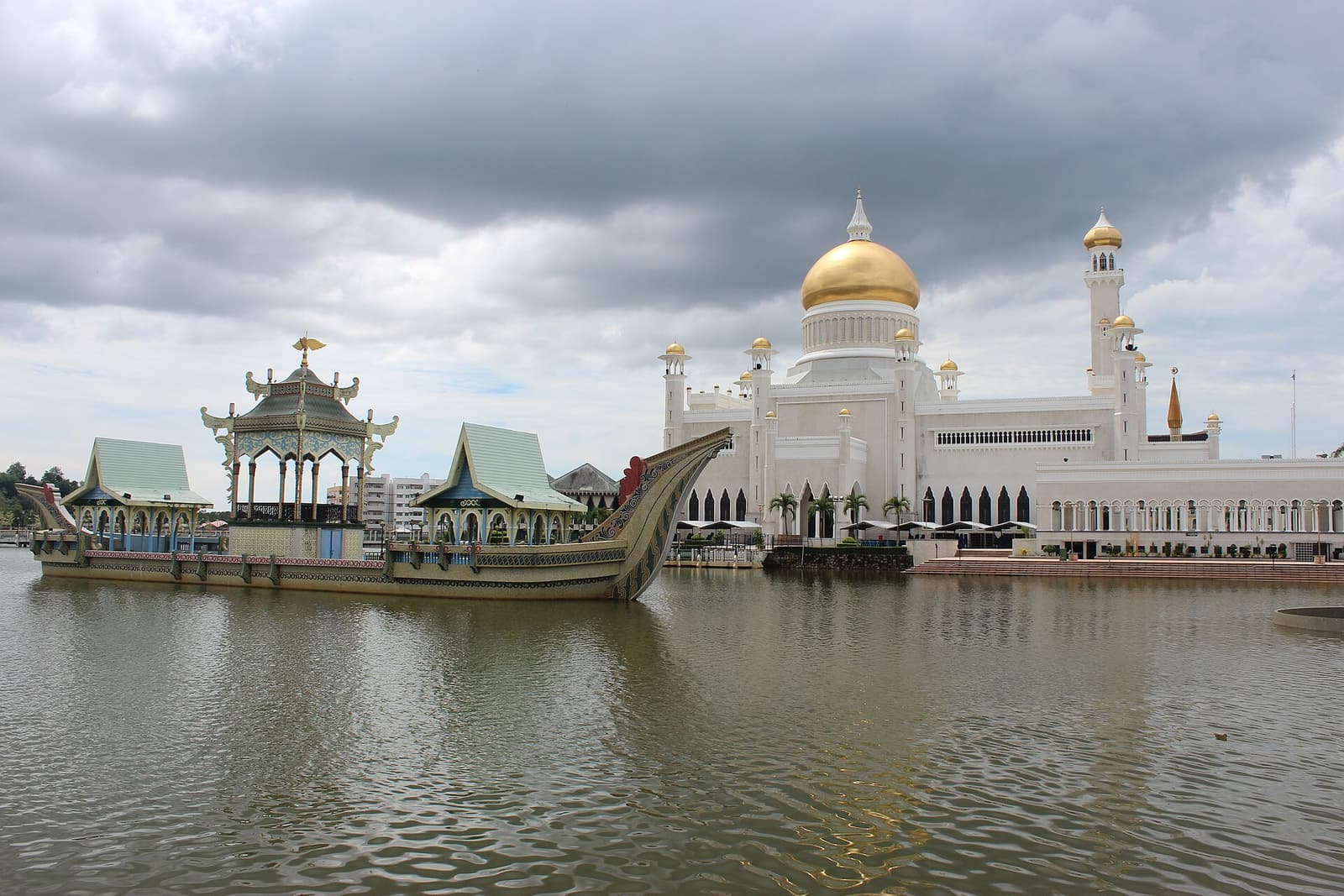
Omar Ali Saifuddien Mosque
The golden dome at the heart of the capital
Brunei’s best-known building: a white mosque with a gold-covered dome, set in a lagoon beside a ceremonial stone barge. Completed in 1958, it is beautiful at any hour and unforgettable at dusk.
 City centre & the river
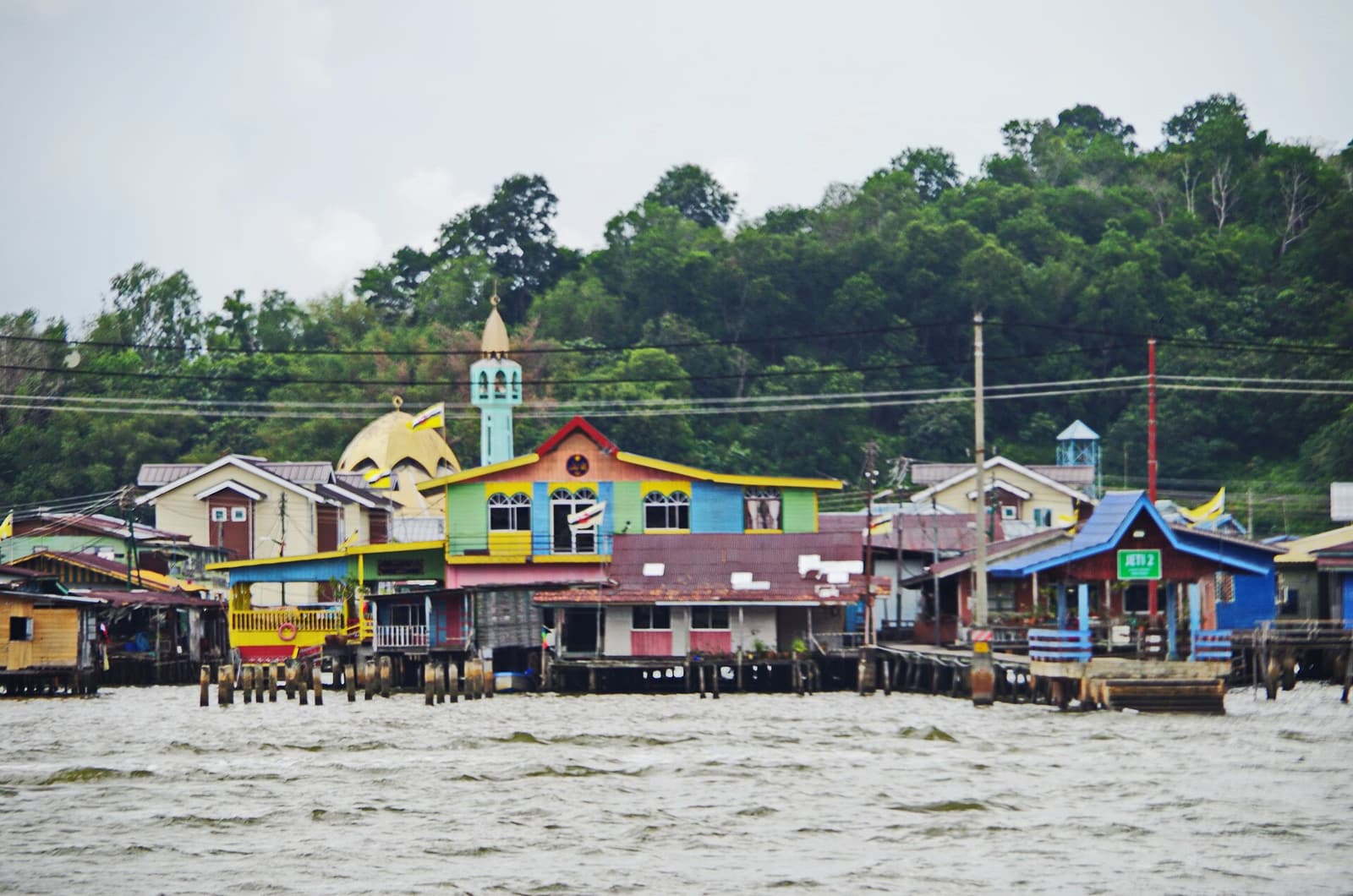
Kampong Ayer
A whole town on stilts in the Brunei River
A centuries-old water village of wooden houses, schools and mosques joined by boardwalks, facing the modern city across the river. Cross by water taxi for about a dollar and start at the Cultural & Tourism Gallery.
 City centre & the river
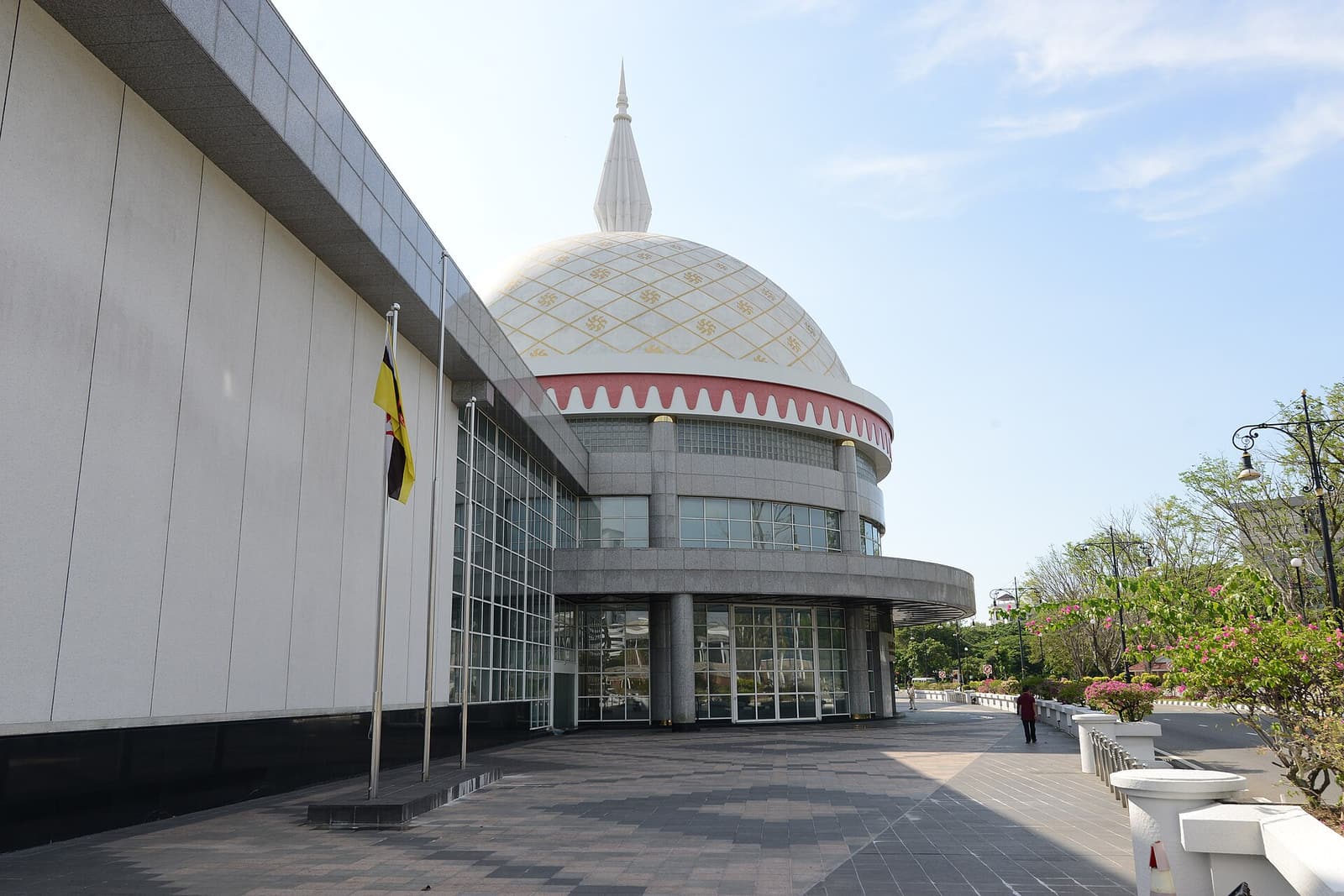
Royal Regalia Museum
Chariots, crowns and gifts from the world’s leaders
A domed museum in the city centre devoted to the monarchy: the gilded chariot used for the Sultan’s Silver Jubilee procession, coronation regalia and rooms of gifts presented by heads of state.
 City centre & the river
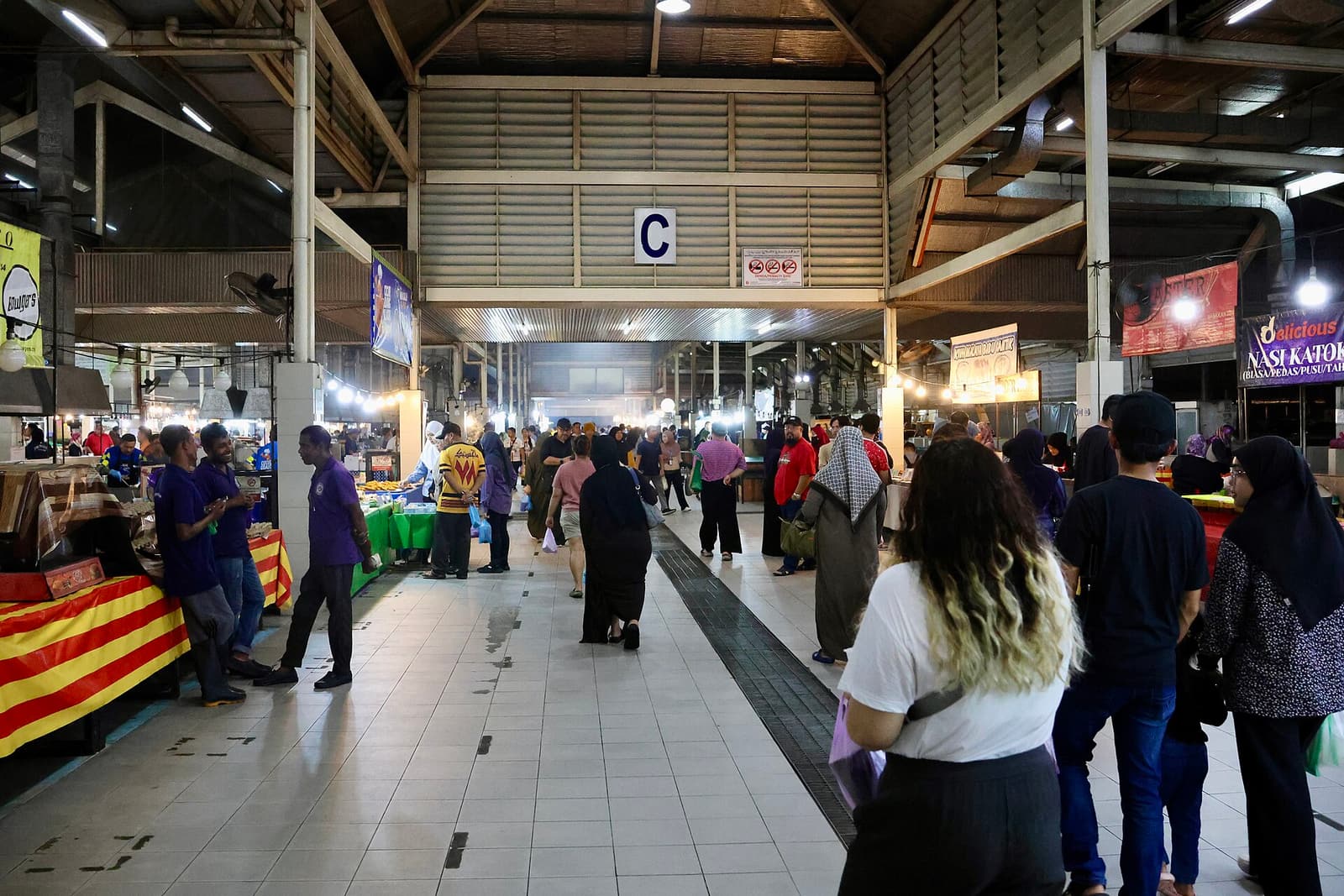
Tamu Kianggeh & Gadong Night Market
Where Brunei shops by day and eats by night
Two markets, two moods: the morning produce stalls of Tamu Kianggeh beside a canal in the centre, and the covered Gadong night market, where most snacks cost a dollar or two. The place to try nasi katok and ambuyat.
Sample itineraries
- One day: Omar Ali Saifuddien Mosque in the morning, the Royal Regalia Museum, lunch, a water taxi to Kampong Ayer, then a river safari at dusk and dinner at the Gadong night market.
- Two days: add a full-day trip to Ulu Temburong National Park.
- Three days: add the Jame’ Asr Hassanil Bolkiah Mosque, the Kota Batu museums, Tasek Lama and sunset at the Empire in Jerudong.
- Four days or more: drive the coast to Tutong and Seria, or spend a night in Temburong.
Local laws and etiquette
Brunei is welcoming and relaxed towards visitors, but it is a conservative country with strict laws, including a Sharia penal code that operates alongside the civil courts and applies in part to non-Muslims and foreigners. Travellers who behave considerately have no difficulty. The points that matter most:
- Alcohol: it is not sold anywhere — not in shops, restaurants or hotels. Non-Muslim visitors aged 17 or over may bring in a limited allowance (at the time of writing, two bottles of wine or spirits and twelve cans of beer) for private consumption; it must be declared at customs on arrival. Drinking in public is an offence.
- Tobacco and vaping: there is no duty-free allowance for cigarettes, smoking is banned in many public places and restrictions apply to e-cigarettes. Check the current rules before you bring any.
- Drugs: penalties are extremely severe and include the death penalty for trafficking.
- Dress: modest clothing is expected of everyone. Cover shoulders and knees in town; mosques lend robes. Swimwear belongs at hotel pools.
- Friday prayers: by law, shops, restaurants and offices close from about 12 noon to 2 pm every Friday. The streets empty; plan to be at your hotel or out on a tour.
- Ramadan: eating, drinking or smoking in public during fasting hours is an offence for everyone, Muslim or not. Restaurants offer takeaway only by day; hotels serve guests discreetly.
- Personal conduct: public displays of affection are frowned upon. Sexual relations outside marriage and same-sex relations are illegal under Bruneian law. Criticism of the Sultan, the royal family or Islam is a serious offence.
- Everyday manners: remove shoes before entering homes and mosques; use your right hand to give and receive; point with the thumb rather than the index finger; do not touch people on the head. Many Bruneians do not shake hands with the opposite sex — wait to see whether a hand is offered.
Money
- Currency: the Brunei dollar (BND, written B$) is pegged one-to-one to the Singapore dollar, and Singapore notes are accepted at par throughout Brunei.
- Cards and cash: hotels, malls and larger restaurants take cards. Markets, water taxis, buses and small eateries are cash only.
- ATMs: widely available in the centre, Gadong and at the airport.
- Costs: local food is cheap (a nasi katok costs a dollar or so), hotels are mid-priced, and tours and private transport are the main expense.
- Tipping: not expected. Some hotels and restaurants add a service charge.
Food and drink
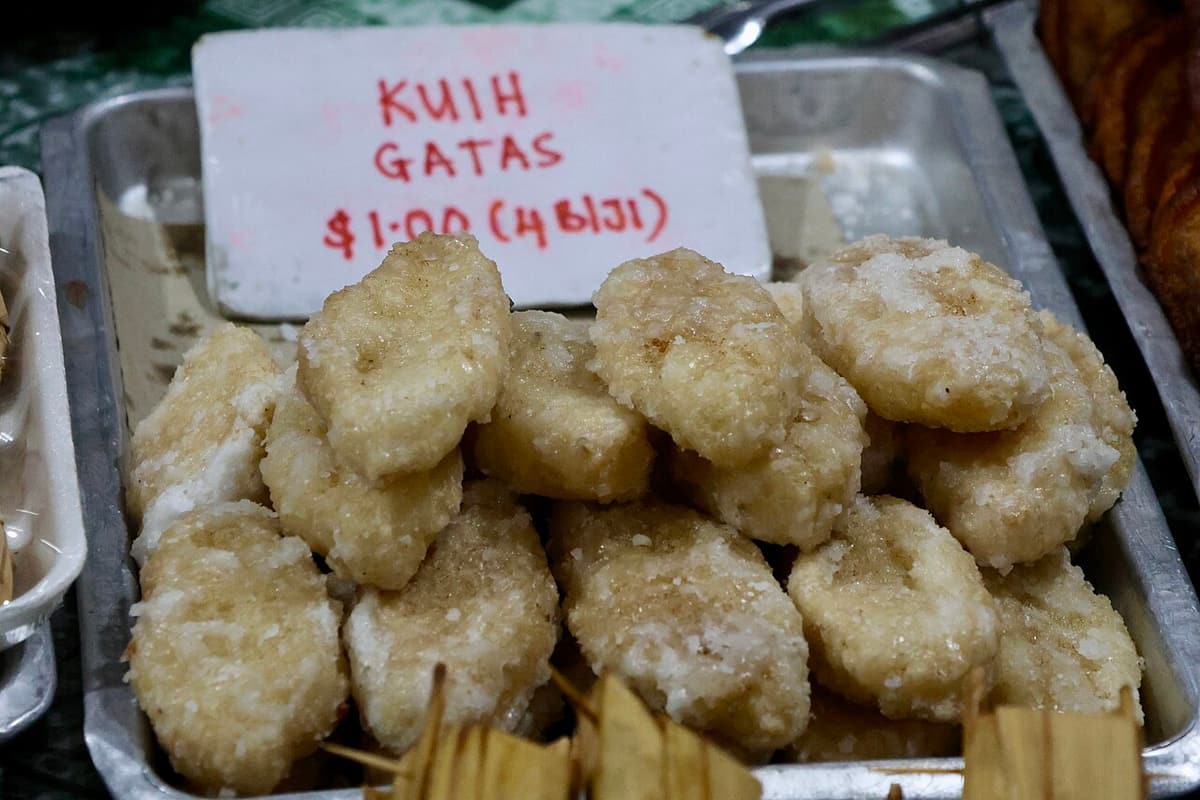
Bruneian cooking is Malay at heart, with Chinese and Indian influences. Look for nasi katok (rice, fried chicken and sambal), ambuyat (sago starch eaten with a bamboo fork and a sour dip), satay, grilled fish, soto noodle soups, kelupis (glutinous rice rolls) and an endless variety of sweet kuih. Almost all restaurants are halal. With no alcohol, the café culture is strong: iced teh tarik, fresh juices and good coffee everywhere.
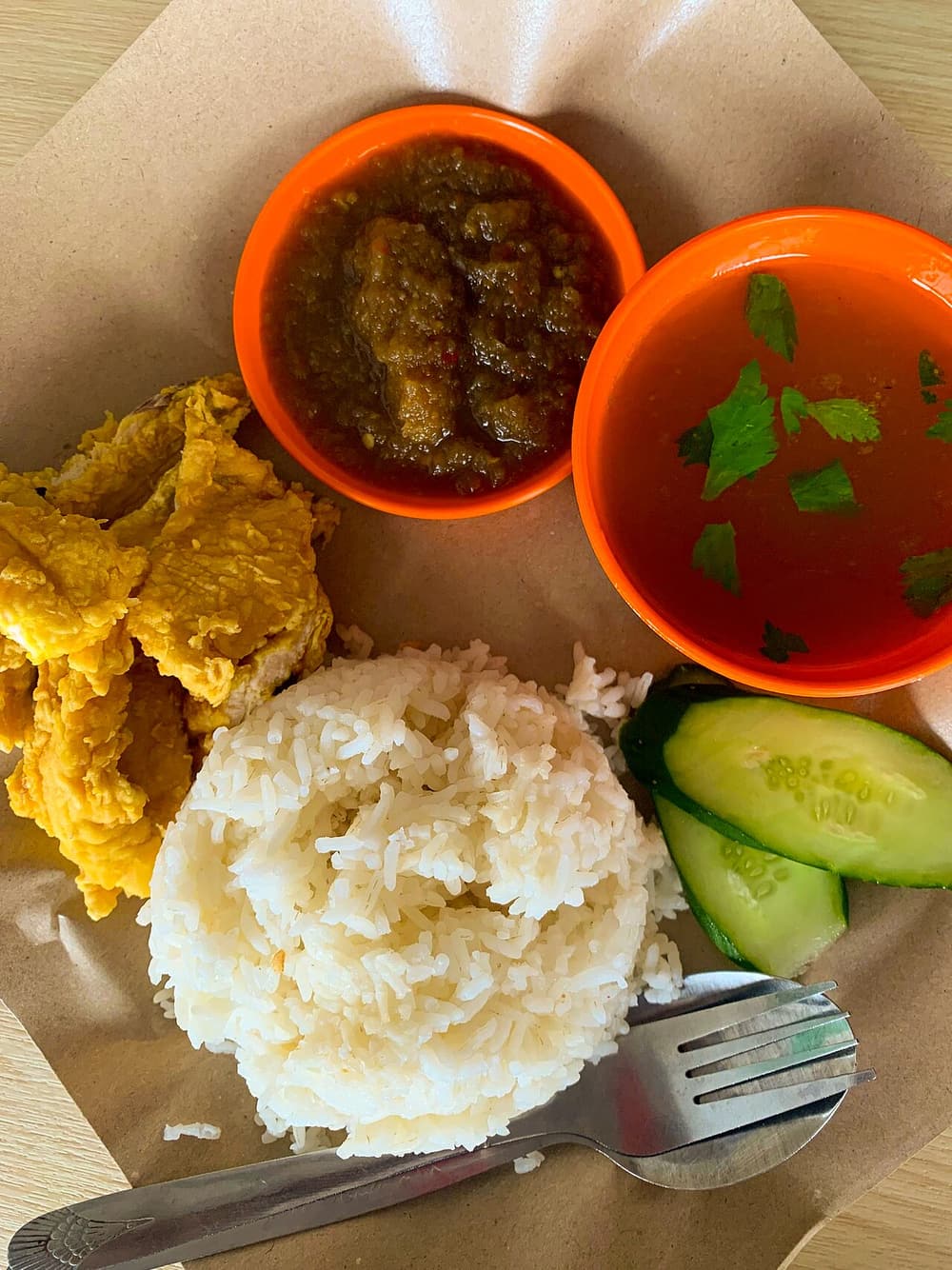
The best places to graze are the Gadong night market and Tamu Kianggeh; for sit-down meals, try the restaurants of Gadong and Kiulap or the waterfront cafés.
Safety and health
- Brunei has very little street crime and is one of the safest countries in the region. Normal care with valuables is enough.
- Tap water is treated, but most visitors drink bottled or filtered water.
- The real risks are the sun, dehydration and slippery paths. Use insect repellent in the forest and near mangroves.
- Do not swim in rivers or estuaries: saltwater crocodiles are present.
- Medical care in the capital is good. Carry travel insurance that covers evacuation.
Language, connectivity and practicalities
- Language: Malay is the official language; English is very widely spoken, and Chinese dialects are common in business.
- SIM cards: tourist SIMs and eSIMs from local operators are sold at the airport and in town; bring your passport.
- Electricity: 240 V, with British-style three-pin plugs.
- Time zone: UTC+8, the same as Singapore and Malaysia.
- Weekend: government offices close on Friday and Sunday, not Saturday.
What to pack
- Light, loose clothing that covers shoulders and knees; a scarf for women visiting mosques.
- A light layer for strong air-conditioning.
- A compact umbrella or rain jacket, sunscreen and a hat.
- Shoes that slip on and off easily, plus grippy sandals or trainers for Temburong.
- Insect repellent, a dry bag and swimwear for the rainforest.